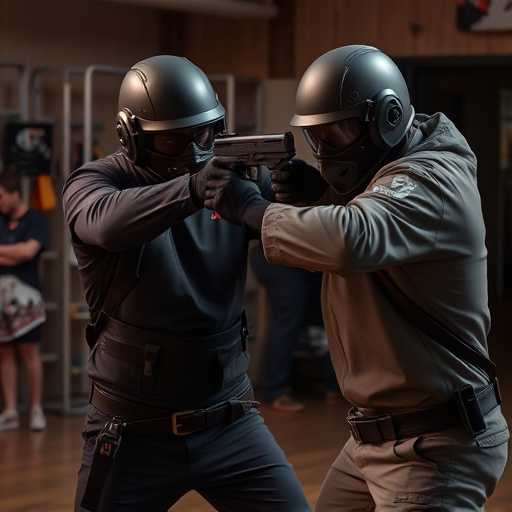
The stun gun vs shock baton comparison focuses on current spread patterns and their effects. Stun guns deliver high-voltage charges for broad, temporary muscle disruption, while shock batons' lower voltage encourages deeper current flow for targeted, severe responses. Shock batons excel in close quarters with easy use and control, but require training to manage safety risks. Stun guns have longer range and ethical debates due to focused probe delivery. Understanding electrical current dynamics is crucial for informed decisions between these devices based on specific needs and tactical considerations.
“Unraveling the science behind electrical current spread is crucial for understanding non-lethal self-defense tools like stun guns and shock batons. This article dives into the intricate details of how these devices work, focusing on their design and the distribution of electric current. We compare stun guns and shock batons in terms of construction, impact, and safety, offering a comprehensive analysis to help consumers make informed choices between these two game-changing personal defense instruments.”
- Understanding Electrical Current Spread Patterns
- Stun Guns: Design and Current Distribution
- Shock Batons: Construction and Impact Analysis
- Comparative Study of Safety and Effectiveness
Understanding Electrical Current Spread Patterns

Electrical current spread patterns are crucial in understanding how an electrical charge moves through different materials, particularly in the context of self-defense tools like stun guns and shock batons. When a stun gun fires a high-voltage charge, the current spreads rapidly across the skin’s surface, disrupting muscle control and causing temporary incapacitation. In contrast, a shock baton delivers a lower, sustained voltage that encourages the current to flow deeper into the body, potentially leading to more severe physical responses.
Analyzing these spread patterns is essential for both safety and effectiveness. By studying how electric currents interact with various body parts and materials, users can better appreciate the differences between stun guns and shock batons, making informed decisions based on their specific needs and circumstances. This knowledge enables individuals to employ these devices more strategically, ensuring maximum impact while minimizing risks.
Stun Guns: Design and Current Distribution
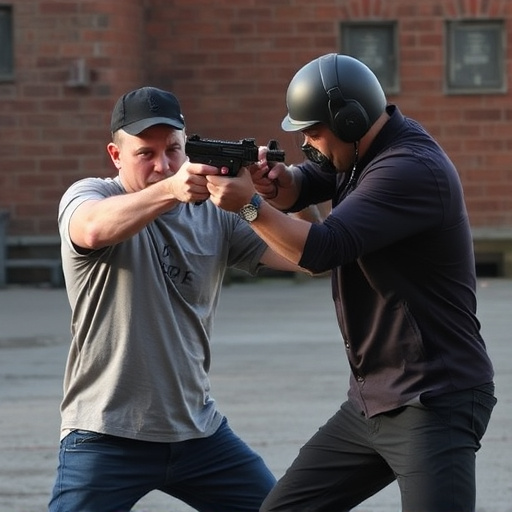
Stun guns, also known as electroshock weapons, differ from traditional shock batons in their design and current distribution patterns. While both devices utilize electrical current to incapacitate targets, stun guns typically have a more compact and uniform current spread. This is achieved through intricate circuit designs that distribute the electric charge evenly across multiple contact points on the device’s surface. In contrast, shock batons often feature elongated prongs or bars, which are designed to conduct current along specific paths, creating a concentrated pulse focused on targeted areas of the body.
The stun gun’s uniform current distribution ensures that the electrical shock is felt over a broader area, potentially reducing the risk of severe injuries and making it a subject’s less lethal option. This design choice also contributes to its effectiveness, as it allows for a more widespread disruption of the target’s nervous system. In comparison, shock batons’ focused current delivery may deliver a powerful but localized jolt, making them more suited for specific tactical situations where targeted incapacitation is required without causing extensive damage.
Shock Batons: Construction and Impact Analysis

Shock batons, also known as stun guns, are non-lethal weapons designed to incapacitate targets through electric current. In contrast to a stun gun that typically uses multiple small probes to deliver shock, a shock baton is a single, elongated device resembling a batons or stick. This construction offers several advantages in terms of portability and ease of use, making it popular among law enforcement and self-defense enthusiasts.
The impact analysis of shock batons reveals their effectiveness in temporarily paralyzing muscles and causing severe pain without causing permanent harm. The electric current disrupts the target’s nerve signals, leading to muscle spasms and loss of balance. This non-lethal approach has sparked debates regarding its ethical use, especially when compared to stun guns that utilize a more focused probe delivery system. However, the direct impact of a shock baton provides a clear advantage in close-quarters combat scenarios, where speed and control are paramount.
Comparative Study of Safety and Effectiveness
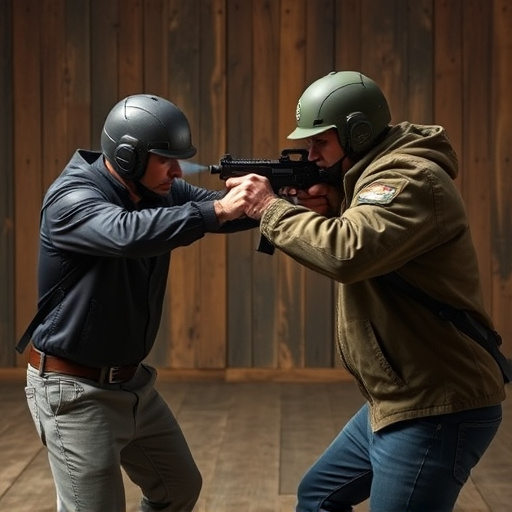
In the realm of personal defense tools, the stun gun and shock baton are two devices that have gained popularity for their ability to incapacitate an assailant without causing permanent harm. When comparing these two, a key factor is understanding how electrical current spreads and affects the body. Stun guns emit a high-voltage, low-current electric discharge designed to disrupt muscle control, while shock batons use lower voltage but higher current levels, potentially delivering more powerful jolts.
This comparative study highlights the nuances in safety and effectiveness. Stun guns often have a longer range, allowing users to disable attackers from a distance. However, their low-current output may not always overcome physical resistance or generate enough force for certain situations. Conversely, shock batons, with their direct contact design, offer quicker activation times and more localized impacts, making them suitable for close-quarters combat. Yet, the higher current levels require proper training to ensure safe usage, avoiding potential side effects like muscle contractions or cardiac disruptions.
Electrical current spread pattern analysis is crucial for understanding the impact and effectiveness of stun guns and shock batons. By examining how electricity distributes across different body areas, we can better compare these non-lethal weapons. Stun guns, with their focused discharge, create a localized stun effect, while shock batons distribute a broader electrical current, potentially impacting multiple contacts. This analysis highlights the unique advantages and limitations of each design in terms of safety and effectiveness, ultimately informing users and law enforcement about the most suitable tool for specific scenarios involving non-lethal force. In the context of a stun gun vs shock baton comparison, understanding these patterns is essential for making informed decisions.