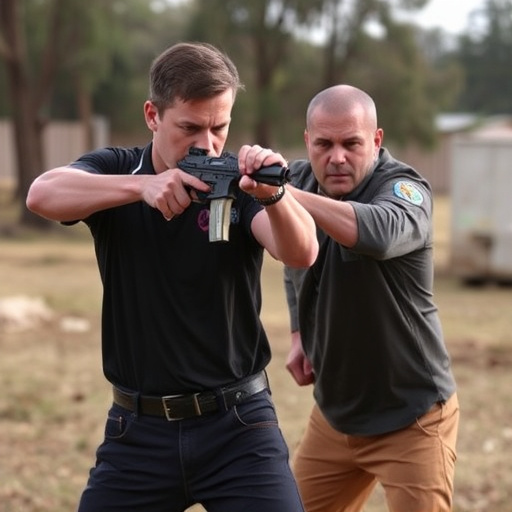
Non-lethal weapons like stun guns and shock batons offer safer alternatives to firearms in dangerous situations. Stun guns, with their electric current delivery, have longer range and higher voltage but require accurate targeting. Shock batons, using low-amplitude electric pulses through conductive contacts, are more focused and controlled. Both tools require specialized training (e.g., stun gun vs shock baton comparison) and certification to ensure safe and effective use, with shock batons favored for crowd control by law enforcement due to their compact size, ease of use, and tactical versatility.
“Unleashing non-lethal force: Mastering Stun Guns and Shock Batons through Certification. In today’s diverse law enforcement landscape, understanding non-lethal weapon training is paramount for effective conflict resolution without causing fatal injuries. This comprehensive guide delves into the intricacies of stun guns and shock batons—their unique features, applications, and head-to-head comparison. We explore the certification process, equipping you with knowledge to prepare and acquire credentials for these powerful yet responsible tools.”
- Understanding Non-Lethal Weapon Training and Its Importance
- Unpacking the Stun Gun: Features and Effectiveness
- The Shock Baton: Design, Use Cases, and Comparisons with Stun Guns
- Certification Process: Preparing for and Acquiring Non-Lethal Weapon Training Credentials
Understanding Non-Lethal Weapon Training and Its Importance
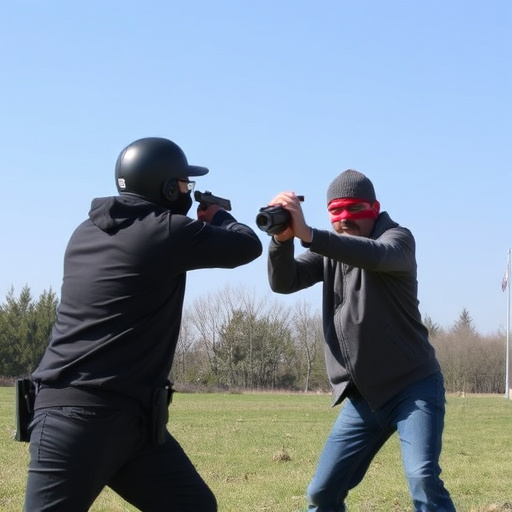
Non-lethal weapon training equips individuals with the skills to de-escalate dangerous situations without resorting to deadly force. This specialized training focuses on using non-deadly force tools, such as stun guns and shock batons, effectively while minimizing harm to suspects or bystanders. Understanding the nuances of these weapons is paramount, especially when considering a stun gun vs. shock baton comparison.
Stun guns and shock batons serve different purposes, each with its unique advantages and limitations. Stun guns emit a powerful electrical discharge designed to temporarily incapacitate a target through muscle spasms, rendering them defenseless for a brief period. In contrast, shock batons deliver high-voltage, low-current electrical pulses via a metal rod, causing intense pain and muscle contractions, allowing the user to gain control of a resistant individual. Both weapons require responsible handling and training to ensure their safe and effective use in emergency or self-defense scenarios.
Unpacking the Stun Gun: Features and Effectiveness
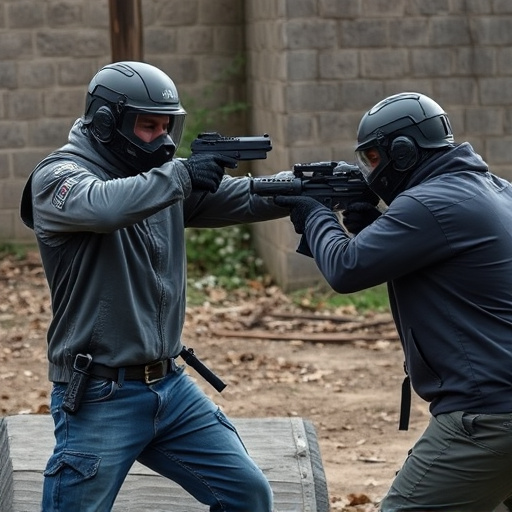
Unpacking a stun gun reveals a powerful tool designed for self-defense, offering a non-lethal alternative to traditional firearms. Unlike shock batons, which typically use spring-loaded projectiles, stun guns deploy electrical current through two metal probes, temporarily incapacitating a target with muscle contractions and disorientation. This technology makes stun guns highly effective at neutralizing aggressors without causing permanent harm.
In terms of comparison, stun guns often possess longer ranges and higher voltage outputs than shock batons, making them suitable for self-defense scenarios where distance and power are crucial. However, shock batons remain a popular choice due to their simplicity and ease of use, as they only require the user to make physical contact with the target. Stun guns, on the other hand, demand accurate targeting to ensure effectiveness while minimizing the risk of accidental discharge.
The Shock Baton: Design, Use Cases, and Comparisons with Stun Guns
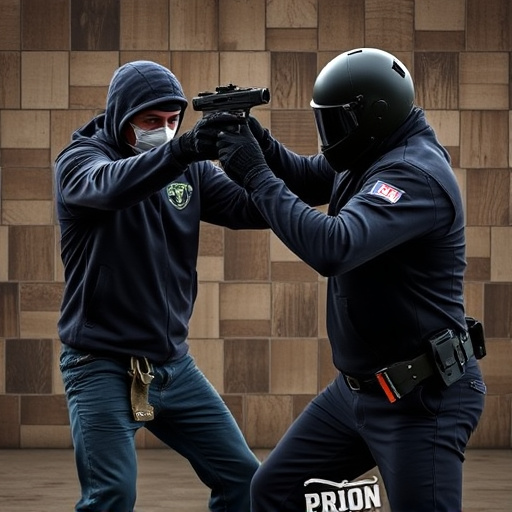
The Shock Baton, a non-lethal weapon, stands out in its design and functionality compared to traditional stun guns. Unlike stun guns that fire electrical charges over a short distance, shock batons deliver low-amplitude electric pulses through conductive contacts on the device’s tip or sides. This design allows for a more focused and controlled discharge, making it effective at immobilizing targets without causing severe harm.
In terms of use cases, shock batons are favored by law enforcement and security personnel for crowd control and aggressive subject management due to their non-deadly nature. When compared to stun guns, shock batons offer a more strategic approach to non-lethal force application, as they can be used in close-quarters combat or to target specific body areas without the risk of permanent disability. Their compact size and ease of use make them a preferred choice for officers on foot patrol and in various tactical situations, providing an alternative to firearms or other lethal options.
Certification Process: Preparing for and Acquiring Non-Lethal Weapon Training Credentials
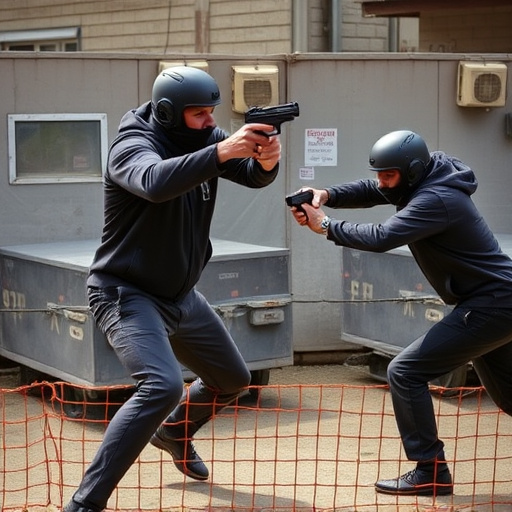
Obtaining non-lethal weapon training certification involves a meticulous process designed to ensure safety and proficiency. Candidates first research reputable training institutions offering programs tailored to their specific needs, whether it’s stun gun or shock baton training. Understanding local laws and regulations regarding non-lethal weaponry is paramount before beginning the certification journey.
Preparation includes reviewing course curricula, mastering basic weapon handling techniques, and familiarizing oneself with safety protocols. Some programs even conduct practical assessments, pitting the skills of trainees against simulated scenarios to test their ability to deploy and control non-lethal force tools effectively. Upon successful completion, individuals receive their well-deserved certifications, empowering them to make informed decisions when facing potentially dangerous situations – all thanks to the knowledge gained during this rigorous training process, with a key focus on the stun gun vs shock baton comparison.
In the realm of personal safety and law enforcement, non-lethal weapon training has become a game-changer. This certification process equips individuals with crucial skills, enabling them to navigate high-risk situations effectively without resorting to lethal force. By understanding the intricacies of stun guns and shock batons, including their unique features and advantages in various scenarios (e.g., stun gun vs shock baton comparison), aspiring professionals can make informed decisions. Completing the certification process ensures individuals are prepared to handle critical incidents with confidence and proficiency, ultimately fostering a safer environment for all.